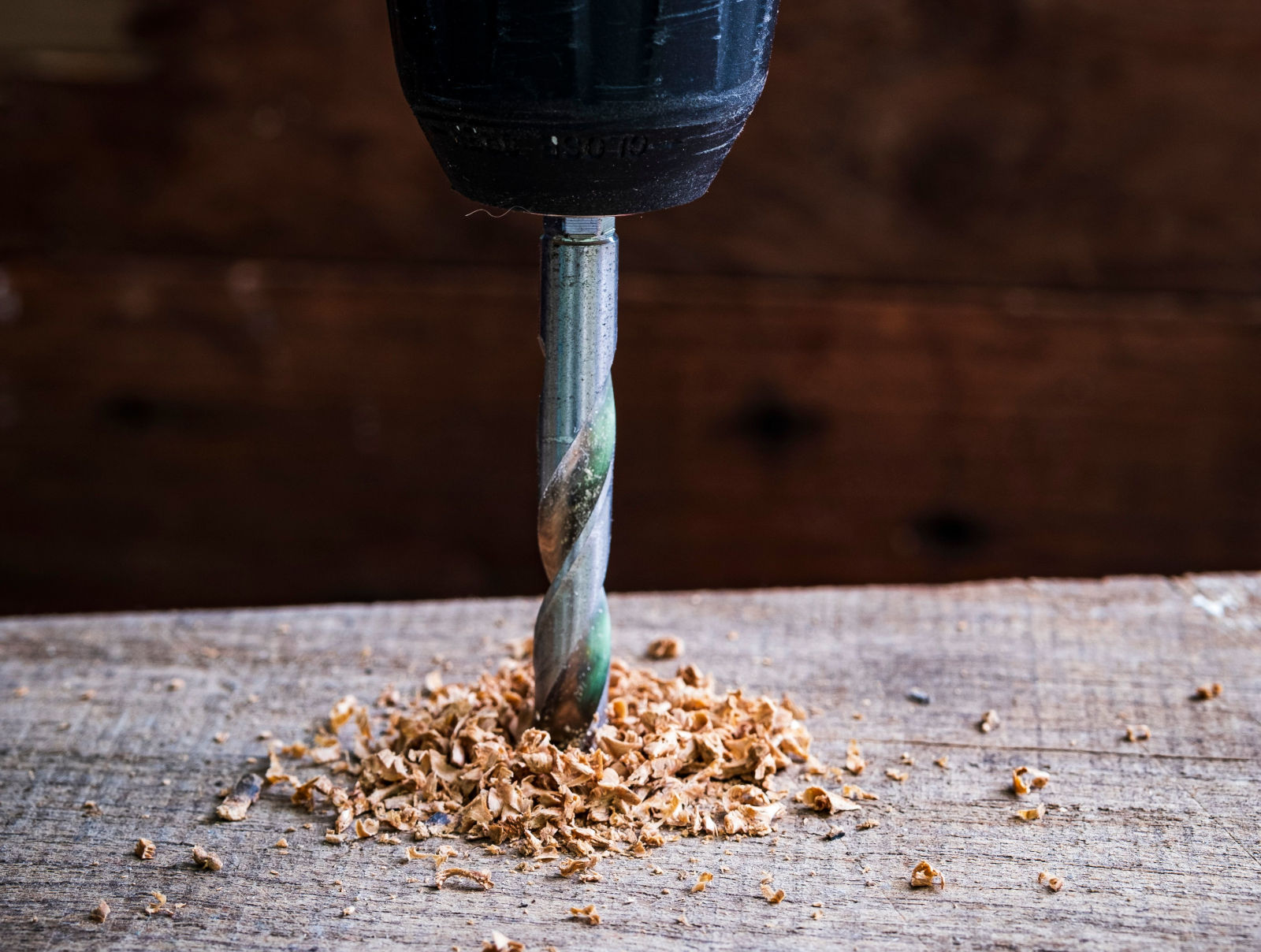
As I get older, I sometimes wonder: 🤔
Is it me, or is it the tool?
You know, when something that used to be easy suddenly becomes a struggle, the first thing that comes to mind is — maybe I am not as strong as I used to be.
Or maybe I am just not doing it right.
Well, my recent encounter with a power drill got me thinking.
Maybe, just maybe, it wasn’t me after all. I simply had the wrong tool.
For all the pickleball enthusiasts out there — nope, I am not talking about pickleball drills.
I am talking about another kind of drill.
The noisy, whirring, sweat-inducing kind.
The power drill. That thingy that drills holes in wood, metal and concrete.
Yup, that kind of drill.
My good ol’ faithful
Eons ago, when I had the flat that I am currently staying in, I bought a Black & Decker corded hammer drill KR600 (600W).
It has been a good ol’ faithful.
For years, it happily drilled holes in the non-structural, lightweight concrete partition. No complaints.
Drilling was a breeze.
But then came the ceiling and those solid concrete columns.
Hmm…
That’s where the trouble started. 😰
I had a hard time drilling holes on these surfaces. I would push hard. The drill would whirr.
I would push harder.
The drill would whirr some more.
And before long, my T-shirt would be soaking wet and I would be sweating profusely — all for a couple of holes. 🥵
A couple of holes!
Man! I really hated drilling on these surfaces.
At that time, I thought maybe that was just the way it was.
Concrete is hard.
Drilling concrete is hard.
Maybe I just needed to push harder.
Maybe I was getting weaker.
Or…
Maybe I was using the wrong tool.
Enter the SDS
Fast forward to early this year.
My house was going through a home improvement programme (HIP), with both toilets getting a refresh. And, of course, after the refresh, there would be things to hang up.
Which means…
More drilling.
So, I started doing my research on the internet.
That’s when I came across the term “SDS rotary hammer drill”.
Hmm…
Now, this sounded interesting.
This type of drill is designed primarily for drilling masonry and concrete. And with its impact mechanism, the drill itself would do much of the work.
In other words, I would not need to push nearly as hard.
Aha!
Maybe it wasn’t me after all.
Maybe I simply had the wrong tool.
Oh boy!
I was sold.
Gonna get myself an SDS rotary hammer drill.
The new kit
After much research, I settled for a Bosch Pro GBH 220 rotary hammer drill.
I also discovered that an SDS rotary hammer needs SDS drill bits because of its special chuck.
Okay.
New drill.
New bits.
Now, the big question…❓❓
Would it really make that much difference?
There was only one way to find out.
The litmus test
Early this morning, I was installing two sets of blinds and needed eight screw holes to secure the brackets to the ceiling.
Eight holes.
Hmm…
This was it.
The litmus test for the new SDS drill.
Does it hold up to its claim?
I chucked in a 5mm SDS drill bit on the Bosch Pro GBH 220 and started drilling on the ceiling.
And…
Wow.
It was such a breeze.
No need to push hard.
No sweating buckets.
Just let the drill do all the work.
Hole after hole.
Done.
I stood there thinking about all those times I had struggled with the old drill, sweating away just to make a couple of holes.
And suddenly, it hit me. 💡
It wasn’t necessarily me.
I simply had the wrong tool.
A little musing
I suppose there is a little musing here.
As we get older, we may sometimes assume that when something becomes difficult, it is because we are no longer as strong, as fast or as capable as we used to be.
Perhaps.
But perhaps not.
Sometimes, the answer is much simpler.
Maybe we just need a better tool.
For DIYers out there, if you are like me, struggling to drill a couple of holes on a solid concrete surface — maybe it is time to put aside your hammer drill and get yourself an SDS rotary hammer drill.
And as for me?
I’ll save the hard workout and sweat for my pickleball drills instead. 😅